Myanmar: Junta Massacre in Bago Highlights Need for International Accountability
New investigation documents deadly airstrike on Buddhist monastery sheltering civilians
(BANGKOK, June 9, 2026)–The Myanmar military junta committed war crimes in Bago Region on March 5 this year when it conducted an airstrike on a Buddhist monastery sheltering civilians, opened fire on civilians from the ground, and arbitrarily detained survivors, said Fortify Rights today. A new investigation reveals how the junta’s airstrike on the monastery and ground attack on civilians killed 28 civilians, including women and children.
U.N. member states should urgently increase support for international accountability for ongoing and unmitigated mass atrocity crimes in Myanmar and should reject coup-leader Min Aung Hlaing’s attempts to legitimize military rule, said Fortify Rights. U.N. member states should also provide political, economic, and material support for Myanmar’s home-grown democratic movement, including the National Unity Government (NUG) and state-level governance initiatives.
The possible war crimes documented by Fortify Rights in Bago Region took place on March 5, 2026, in Yae Twin Kone village tract, where Myanmar military junta forces bombed the local monastery, entered villages, and detained civilians, according to survivor testimony and pro-democracy forces on the ground. Two days later, on March 7, pro-democracy forces carried out a rescue operation to free the civilians detained by the military junta.
“This massacre in Bago Region reflects the Myanmar military junta’s ongoing strategy of terrorizing civilians in areas seen as supporting the resistance,” said John Quinley, Director at Fortify Rights. “Our investigation shows the junta failed to distinguish between civilians and combatants and did not take all feasible precautions to protect civilians. The bombing of the Buddhist monastery where civilians had sought shelter was not a justified military target. The killing of civilians, including children, may amount to war crimes and underscores the urgent need for international accountability.”

In March and April 2026, Fortify Rights was in Bago Region and interviewed 13 individuals about the detention of civilians and bombing of a Buddhist monastery, including survivors and witnesses, resistance fighters, and medical workers. Fortify Rights conducted all interviews in person and reviewed photographs of civilians killed at the monastery, as well as drone footage documenting civilians in junta detention, provided by members of a local People’s Defense Force (PDF). The NUG in Bago Region also provided Fortify Rights with casualty records, including the names of 26 people killed in the airstrike on March 5 and another two killed in Yae Twin Kone village tract. Fortify Rights was unable to independently verify all of the names on the list.
According to information received and analyzed by Fortify Rights, in the early morning of March 5, 2026, Myanmar junta columns from Light Infantry Battalion 20, Infantry Battalion 264, and Light Infantry Battalion 439—under Light Infantry Division 77—entered Yae Twin Kone village tract and carried out attacks, including killings and arbitrary detentions. Civilian survivors said the Myanmar military opened fire on local residents, conducted an airstrike on the local monastery sheltering civilians, and deployed at least one drone attack, killing a total of 28 civilians.
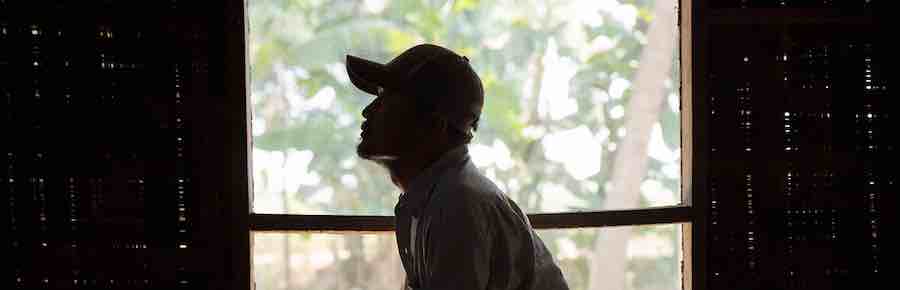
One survivor, 43, whose wife and son were killed by the junta on March 5, described to Fortify Rights how Myanmar military junta soldiers detained him alongside dozens of villagers in Kyaung Kone village before conducting an airstrike on the nearby Buddhist monastery.
“Around 5 a.m., I woke up and took my motorbike to harvest peanuts,” he said. “When I was leaving, the military arrested me. They had already arrested other people. I was arrested around 5:30 a.m.”
The survivor continued: “They tied our hands together with a long rope. They told us, ‘You are PDF.’ We explained, ‘We are not PDF.’ They accused us, saying, ‘Don’t lie. We will cut your balls.’”
This survivor estimated that between 30 to 40 Myanmar junta soldiers were present with his group of detained civilians, all wearing military uniforms and speaking Burmese: “We know the difference between the PDF and the military,” he said.
The man also described soldiers appearing intoxicated after snorting a white powdery substance while operating inside the village. He told Fortify Rights:
There was one soldier who looked crazy. … Everyone [among junta soldiers] was using drugs at the time. I could move my head [to look around while tied up]. I could see the soldiers using drugs inside the house. It looked like white powder. The house was right next door to where we were tied up, around three meters away.
Fortify Rights was unable to independently verify the exact substance used by the soldiers. However, substance abuse—particularly of illicit stimulants—among Myanmar junta soldiers is well-documented and has often been linked to violent and unpredictable behavior during military operations.
While lying face down on the ground with his hands tied behind his back, this witness said he overheard soldiers communicating by walkie-talkie about attacking the monastery inside the village. He told Fortify Rights:
On the radio, they told their commander, “PDFs are in the monastery.” … What I remember them saying on the walkie-talkie was, “Inside the monastery. Attack the monastery. Bomb it.” … I was three or four meters away from the soldiers talking on the radio. I was lying face down with my hands tied behind my back, but I could hear everything.
The survivor later heard a soldier report over the radio: “We shot one kid.” Afterward, the man realized the soldier was referring to his son, whom the junta killed in the incident.
“My son is 14 years old,” he said. “He was afraid, and he ran, but they shot him.”
Junta soldiers released this survivor and allowed him to return home at night, but the soldiers threatened to shoot him if he or others fled the area. Upon release, he searched for his family and described the moment he found them: “I went to the [Buddhist] monastery [where the airstrike had hit] and saw my wife’s dead body. … I saw her body in a corner. … I found my son dead near a bell.”
The military allowed survivors to have a burial ceremony on March 6 to bury 26 civilians killed in the airstrike and two dead from reported shootings in the village. The bodies were buried in two mass graves.
This witness insisted the attack was deliberate and not the result of crossfire between the military and resistance forces, saying: “At that time, [the soldiers] were already near the monastery. We told them, ‘PDF is not in the village.’ The soldiers knew there was no resistance.”
He believed the motive behind the attack was clear: “The military wanted us to stop supporting the resistance.”
For decades, the U.N., governments, non-governmental organizations, and journalists have documented how the Myanmar military has deliberately targeted civilians as part of a broader strategy to sever popular support for democratic resistance movements and ethnic resistance organizations. Through airstrikes, village burnings, arbitrary arrests, torture, forced displacement, and attacks on civilian infrastructure, the junta has repeatedly sought to terrorize communities into submission and punish populations perceived to support opposition forces.
In Yae Twin Kone village tract, NUG aerial footage on file with Fortify Rights shows more than 20 residents in civilian clothes lying face-down on the ground as villagers dig a grave nearby for bodies wrapped in cloth.

* * *
Another resident, 43, told Fortify Rights that junta soldiers held her hostage in Yae Twin Kone village tract after detaining her on the morning of March 5 while she was on her way to give alms:
I could see the soldiers beating the men [outside on the road]. …. They used long bamboo sticks to hit three or four guys. They were tied up as they were beaten. I could see they were beaten on the back, shoulders, and hips. They were yelling, asking, ‘Where do the PDF live?’ The soldiers said, “Open your phone with your password.” The men stayed lying down and didn’t respond. So the men were beaten.
The woman overheard the orders to attack the Buddhist monastery. She said:
I was sitting close to the soldiers. They were on their radios. … I heard one soldier tell them on the walkie-talkie, “to attack the monastery.” … It was about 10 minutes [afterwards]. I heard the bomb drop. The sound was so loud. We stayed quiet. … I heard one bomb. … After that, I was very afraid [to pay attention] and didn’t hear anything else.
She continued:
Around 5 p.m. [on March 5], the soldiers told us not to leave the village. They said, “If anyone runs away from the village, we will burn and kill everyone in the village.” We all went home, made a small amount of food, and slept in the bunker. I was so afraid they were going to attack the village with more drones and jets.
When asked why villagers were detained, and why the area was targeted in airstrikes, she said: “I believe that the soldiers thought we were supporting the resistance soldiers.”
* * *
Another resident from Kyaung Kone village told Fortify Rights that he was part of a small team that went to the Buddhist monastery after the airstrike, saying:
I don’t know the time the airplane came. It was a jet fighter. I was hiding in the bunker. I heard the explosion. It was a big bang sound. I heard one explosion. We waited for five minutes, and I went out to check the temple. … I was trying to help the injured. … Not far from the temple, there were some military [soldiers] shooting at me. It was about 15 meters away. I gathered my strength and thought I needed to be brave. They shot once at me, and I laid down, then I ran to the temple.
Upon arriving at the monastery, the man explained that he helped several young people flee the scene: “One was injured on the head. He was bleeding, a boy. The blood came down his face. When I came to the temple, the young people said, ‘Please help me, uncle.’”
Later, the man helped carry a wounded woman, telling Fortify Rights:
She was injured on her chest, head, and leg. She was bleeding from the head and chest. I was carrying her on my back. My whole shirt was filled with blood. It was a major injury. The time from when I carried her from the temple to the house where she died was around four hours. … She must have died around 2 p.m. … I don’t know her name. She was over 40 years old. She was injured in the airstrike.
Fortify Rights showed the man photographs of the Buddhist monastery, and he described the building’s details, including the direction from which he entered. He said: “The monastery was totally destroyed. … The roof was completely gone. The first floor collapsed to the ground. It was concrete, and the floor is wood.”
The man also reported seeing a dead pregnant woman in the monastery: “The pregnant woman was dead, and the baby’s hand was coming out of her stomach. … She was going to deliver the baby soon.”
The man also described assisting with the burial in two mass graves on March 6, saying:
When the soldiers gave us two hours to dig the graves, we had to bring the dead bodies [from the monastery]. … I carried the dead bodies on my shoulder and brought them into the grave. They put [the group of men] in a line. They put the babies on the legs of the women. That’s how the mass graves were done.

* * *
According to the NUG, on March 7, PDF units under the NUG Ministry of Defense, together with the Karen National Liberation Army— the armed wing of the Karen National Union, one of Myanmar’s oldest ethnic resistance organizations—conducted the rescue operation to free civilians detained.
So Daw, a PDF commander, described the high-stakes rescue mission launched after learning that the junta had arbitrarily detained civilians. Although the operation succeeded in freeing the civilians, he told Fortify Rights it was “extremely risky.”
A commando from the PDF Spring Warrior Column described how they entered the village after 10 p.m. on March 7 to push junta forces out and rescue the civilian hostages. As the military junta retreated, the fighters supported civilians fleeing. “I was guiding them,” the PDF soldier explained from a makeshift clinic bed, where he was recovering from wounds sustained just a week after the rescue in a different battle in Bago. “Children were holding my hand as I led them out [on March 7]. We carried an older, wounded woman on a stretcher made from bamboo and a longyi.”
The detention of civilians and attacks on civilians in Bago may amount to serious violations of international humanitarian law. Since the military coup in 2021, armed conflict between the Myanmar military junta and pro-democratic resistance forces has intensified nationwide.
Bago has become one of the most strategically significant battlegrounds in the effort to overthrow the military junta that illegally seized power in 2021. Located between Yangon, the country’s largest city, and the military capital Naypyidaw, the region serves as a critical corridor. In recent years, revolutionary forces have established strongholds in parts of Bago, increasingly challenging the junta’s control.
Under international humanitarian law, or the laws of war, including Common Article 3 of the Geneva Conventions, parties to an armed conflict are prohibited from committing “violence to life and person,” including murder, mutilation, cruel treatment, and torture of persons taking no active part in hostilities. Common Article 3 also prohibits the taking of hostages and requires humane treatment of civilians and other protected persons.
The bombing of a Buddhist monastery sheltering civilians and the killing of an unarmed 14-year-old boy may constitute war crimes under international law. Parties to an armed conflict are required at all times to distinguish between combatants and military objectives, which may be lawfully targeted, and civilians and civilian objects—including religious sites—which are protected from attack unless and for such time as they are being used for military purposes. Parties must also take all feasible precautions to verify that targets are military objectives and to minimize harm to civilians and civilian objects.
The Myanmar military junta’s repeated airstrikes on civilian areas in places like Bago Region, Karenni and Kachin states, and elsewhere do not serve any legitimate military purpose and likely constitute war crimes. These attacks continue a broader pattern of junta attacks against civilian targets throughout the country, said Fortify Rights.
“The laws of war protect civilians from being deliberately attacked and killed,” said John Quinley. “The massacre in Bago underscores the urgent need for justice and an end to impunity for crimes committed by Myanmar’s military regime. U.N. member states, including Myanmar’s neighbors in ASEAN, can and should do more.”
Photo credit: A father mourns the loss of his wife and son following a Myanmar military junta attack in Bago Region on March 5, 2026. ©Brennan O’Connor, 2026.