UN Special Envoy on Myanmar calls for release of Aung San Suu Kyi
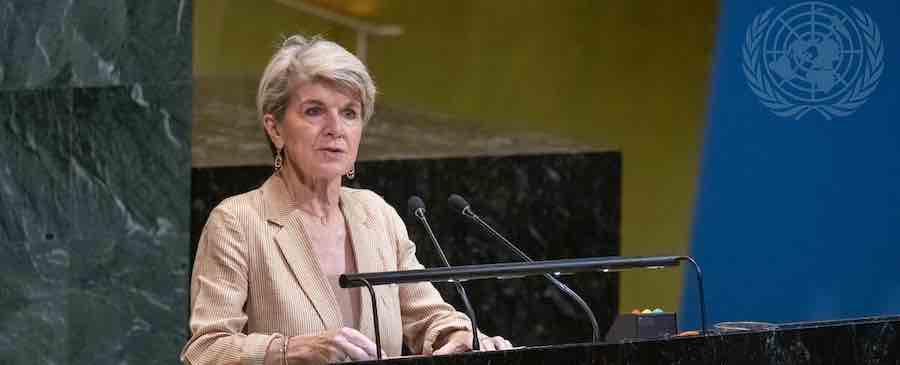
The United Nations Special Envoy on Myanmar, Julie Bishop, delivered a scathing indictment of Myanmar over five years after the military coup on Feb. 1, 2021, to the U.N. General Assembly in New York City on June 19.
Bishop’s address at U.N. Headquarters coincided with the 81st birthday of jailed democracy leader Aung San Suu Kyi. The former Australian Foreign Minister presented a grim report on the complete breakdown of the rule of law across regime-controlled Myanmar.
A grim list of international records
In her speech to U.N. member states, Bishop painted a picture of a collapsing nation where deep-seated instability has created a sprawling vacuum exploited by transnational criminal organizations.
Instead of a localized civil crisis, Bishop warned that the consequences are actively bleeding past Myanmar’s borders with devastating global implications. According to her findings, Myanmar is now setting global records for human suffering and criminality:
- Global Cybercrime Syndicate: The country has mutated into an unchecked hub for industrial-scale online scam compounds. Trafficking networks feeding these compounds have expanded into Africa, targeting victims globally across the United States, Asia, and Europe.
- Narcotics and Landmines: Myanmar has become a primary international supplier of high-grade methamphetamine and opium, while simultaneously ranking as the world’s leading source of landmine casualties.
- The Toll on Children: Bishop revealed that 2025 was officially recorded as the deadliest year for children in Myanmar since the 2021 coup, with state-sponsored airstrikes identified as the leading cause of youth casualties.
- Severe Hunger & Displacement: The country has plunged into the world’s top six most critical hunger hotspots. More than 3.7 million citizens are internally displaced, with an additional 1.6 million seeking refuge across the region—including 1.2 million stateless Rohingya in Bangladesh.
Exposing the 2025-26 ‘sham’ elections
The Special Envoy used her address to firmly dismiss Naypyidaw’s claims that a transition to civilian normalcy is underway. Bishop walked member states through the political maneuvering orchestrated over the last six months.
A three-phase general election concluded on Jan. 25, resulting in a predictable landslide victory for the Union Solidarity and Development Party (USDP)—the political proxy of the military.
When combined with the 25 per cent of parliamentary seats constitutionally locked for military appointees, Bishop noted the process further entrenched the military’s grip over the population rather than offering a path toward democracy.
Timeline (2026)
├── January: Mock polling concludes; military proxy party (USDP) claims landslide
├── March: Military legislature appoints Min Aung Hlaing as "Political Leader"
└── April: Min Aung Hlaing assumes Presidency, stepping back as Commander-in-Chief
Bishop clarified that the U.N. completely refused to support, fund, or observe the electoral process in Myanmar.
“Many on the ground described tight security, a reduced electorate, the exclusion of major political parties, low turnout, and polls conducted in the midst of an ongoing armed conflict,” Bishop reported.
“The overall outcome is viewed by Myanmar’s stakeholders as a consolidation of power for the military, not a transition to civilian government.”
Demanding ‘Proof of Life’ for Aung San Suu Kyi
Bishop addressed her fourth diplomatic mission to Myanmar, where she met with regime leader Min Aung Hlaing. She noted that while he sought goodwill through the recent release of President Win Myint, his continued isolation of other elected officials is unacceptable.
Focusing heavily on the 81st birthday of Aung San Suu Kyi, Bishop demanded that international actors stop engaging with the regime in Naypyidaw based strictly on economic self-interest while the country’s elected leader Aung San Suu Kyi is hidden from view.
“There have been no independent, verifiable reports of her circumstances for years. Today, on her 81st birthday, I urge others to join with me in calling for her release. In the eyes of many, there can be no progress to peace while ever State Counsellor Daw Suu is held prisoner.”
The UN vows to ‘stay and deliver’
Looking forward, Bishop emphasized the critical importance of regional cohesion, highlighting her ongoing collaboration with the 2026 Association of Southeast Asian Nations (ASEAN) chair the Philippines’ Special Envoy Theresa Lazaro, and looking ahead to Singapore’s 2027 chairmanship.
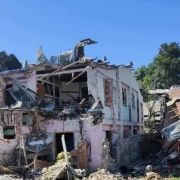
Despite escalating hate speech against refugees, intense military operations, and the compounding structural trauma of the catastrophic 2025 Myanmar earthquake, Bishop concluded her briefing with a firm message that the international body would not withdraw its aid networks.
“The calls of the General Assembly and Security Council have been ignored,” Bishop stated. “But the United Nations, through its agencies, funds, and programs, will stay and deliver in Myanmar despite immense challenges. The international community must remain steadfast in solidarity with the people of Myanmar and be guided by their appeals for help.”