What’s at Stake in Myanmar’s ICJ Trial for Genocide?
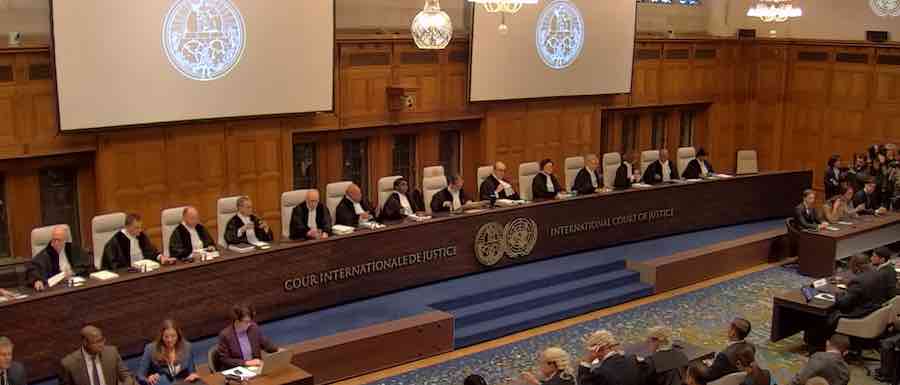
The International Court of Justice (ICJ) has begun the session that will deliver a landmark ruling in the case brought by the Gambia accusing Myanmar of genocide against the Rohingya.
This is the first time in history that Myanmar faces a court ruling on these crimes, not as a criminal case against individuals but to determine whether it bears responsibility for genocide as a state.
What to look for in today’s ICJ judgment
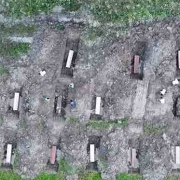
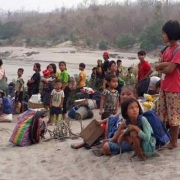
In 2017, the Myanmar military’s “clearance operations” in northern Rakhine State forced more than 700,000 Rohingya to flee widespread killings, sexual violence and arson attacks, according to UN investigations.
In 2019, the Gambia—which ratified the Genocide Convention in 1978—filed a case at the ICJ with the backing of the Organization of Islamic Cooperation (OIC), alleging that Myanmar’s atrocities against the Rohingya violated the convention.
In December 2019, when the ICJ held hearings on Gambia’s request for provisional measures to protect the thousands of Rohingya remaining in Myanmar, Aung San Suu Kyi decided to lead Myanmar’s legal defense as state counsellor and foreign minister.
The following month, the ICJ ordered Myanmar to prevent all genocidal acts against the Rohingya and to take steps to preserve evidence related to the case.
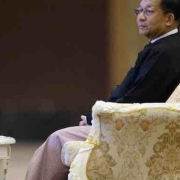
Since 2022, Myanmar has been represented at The Hague by the military regime that seized power in the 2021 and is led by Min Aung Hlaing, who had overseen the atrocities as military chief.
In July 2022, the ICJ rejected Myanmar’s preliminary objections and ruled that the case could move forward. It took until August 2023 for the Myanmar regime to submit its reply to the Gambia’s original legal argument, known as a “memorial.” The Gambia submitted its reply in May 2024.
In January this year, the ICJ held three weeks of so-called “merits hearings” with arguments, evidence, witnesses, and an expert from both sides. Eleven countries—Canada, Denmark, France, Germany, the Netherlands, the UK, the Maldives, Slovenia, the Democratic Republic of Congo, Belgium, and Ireland—were permitted to intervene on treaty interpretation under Article 63.
On Thursday, the ICJ delivers its final judgment concluding the proceedings. There is no possibility of appeal.
What is the Gambia asking the ICJ to do?
The Gambia has asked the ICJ to find Myanmar responsible for multiple violations of the Genocide Convention, including committing, conspiring to commit and failing to prevent genocide, and failing to prosecute those suspected of committing it.
It has also asked the court to order Myanmar to end these violations, introduce specific legislation criminalizing genocide, prosecute alleged perpetrators, and prevent direct and public incitement to genocide.
The Gambia is also seeking reparations for Rohingya victims, such as ensuring the “safe and dignified” return of refugees as well as financial compensation and other forms of reparation.
Although the Gambia is not directly affected by the alleged genocide, it claims the legal right to seek reparations on behalf of the Rohingya victims in its capacity as a signatory to the convention. Myanmar disputes this position.
The Gambia has further asked the court to find that Myanmar failed to comply with its January 2020 provisional measures order and to require guarantees that such violations will not happen again.
What if Myanmar defies the ICJ ruling?
If Myanmar fails to comply with any ICJ judgment against it, the other party can turn to the UN Security Council, which may recommend or decide on measures to enforce it, in accordance with UN Charter article 94(2). The UNSC has never acted on this discretionary power, and Myanmar has two powerful allies in permanent UNSC members China and Russia.
What is the situation in Myanmar?
Besides the Rohingya genocide case, the Min Aung Hlaing regime faces lawsuits in six countries for alleged war crimes and crimes against humanity since the 2021 coup.
The regime continues to hold political prisoners, including Aung San Suu Kyi, and has killed more than 8,600 civilians and detained over 32,000 people since the coup, according to the Assistance Association for Political Prisoners.
Millions of young people have fled to other countries due to forced conscription, security fears, and a lack of jobs amid inflation, widespread crime, and escalating conflict across the country.
The civilian death toll continues to grow amid daily regime airstrikes and ground attacks in resistance-held territory.